Speaking Through Silence
An Online Art Exhibition
Honoring “Comfort Women” From Indonesia
This project was made possible by a grant from CARE (Comfort Women Action for Redress and Education).
It honors Comfort Women from Indonesia through the Lee Yong Soo Comfort Women Human Rights Research and Creative Activity Scholarship cycle.
See the https://comfortwomenaction.org/ website for more information on projects regarding Comfort Women Action.
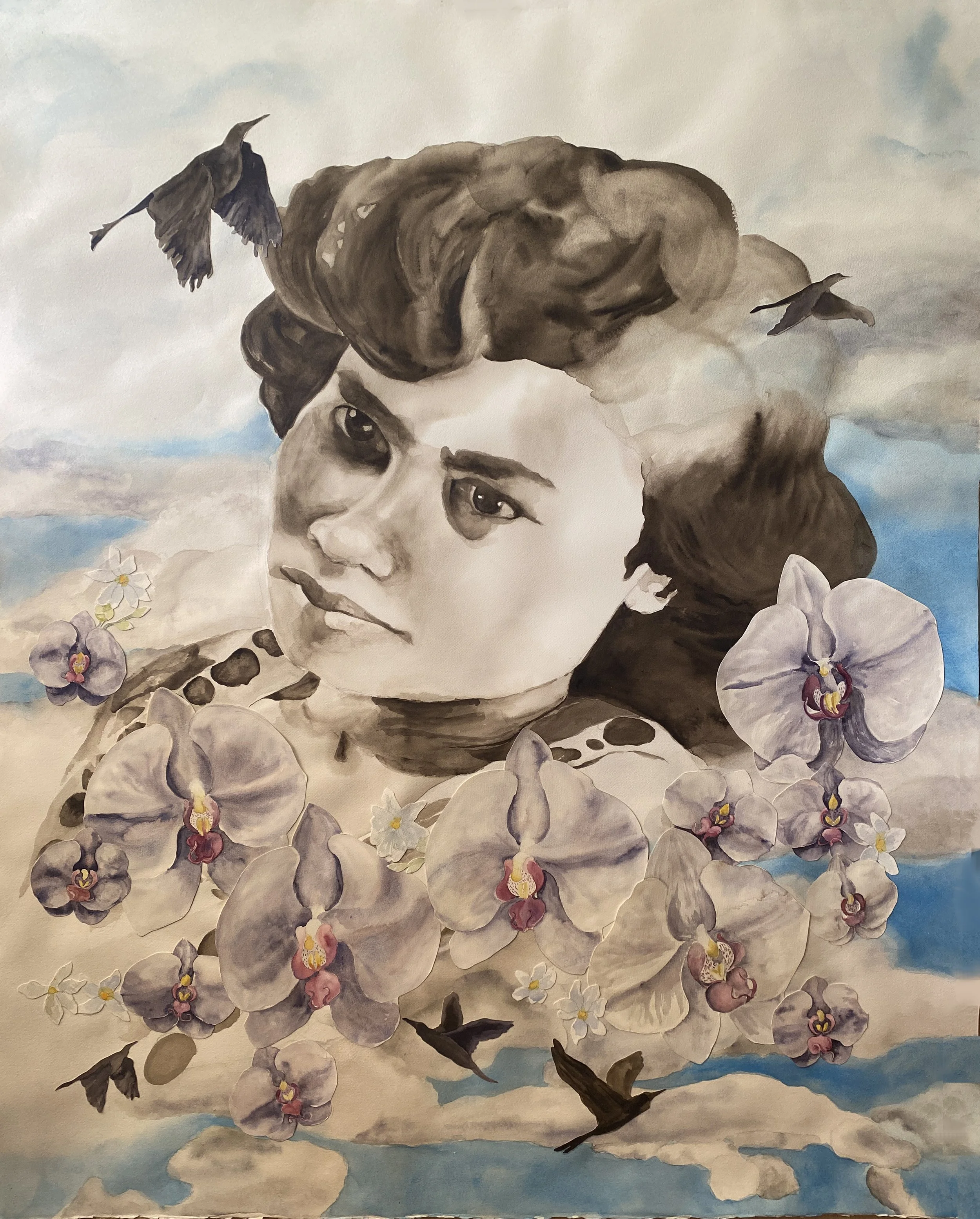
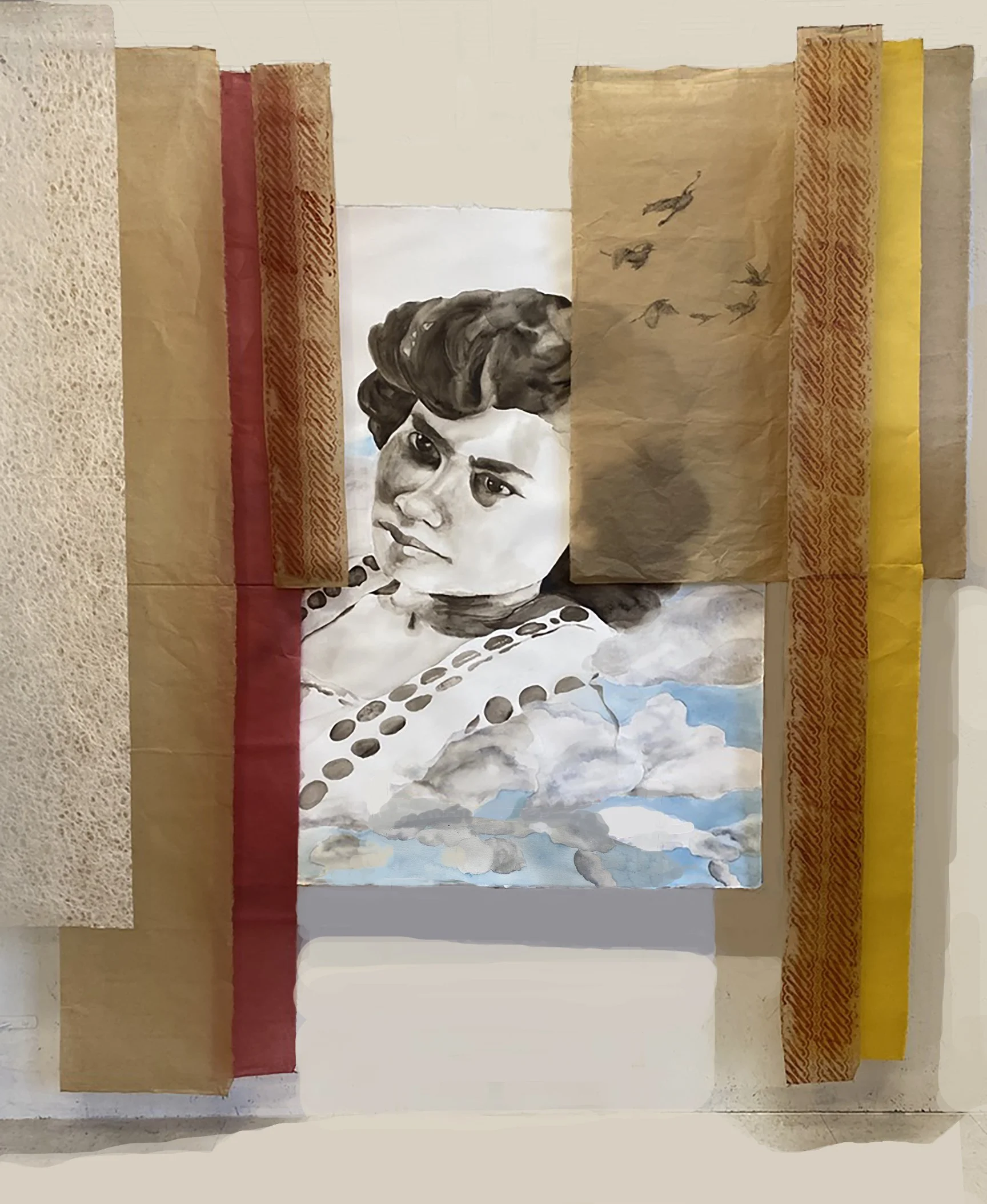
I Wish I Knew Your Name, 2026, Watercolor on Arches Paper, Watercolor Appliques of Birds & Orchids, 52” x 42,”
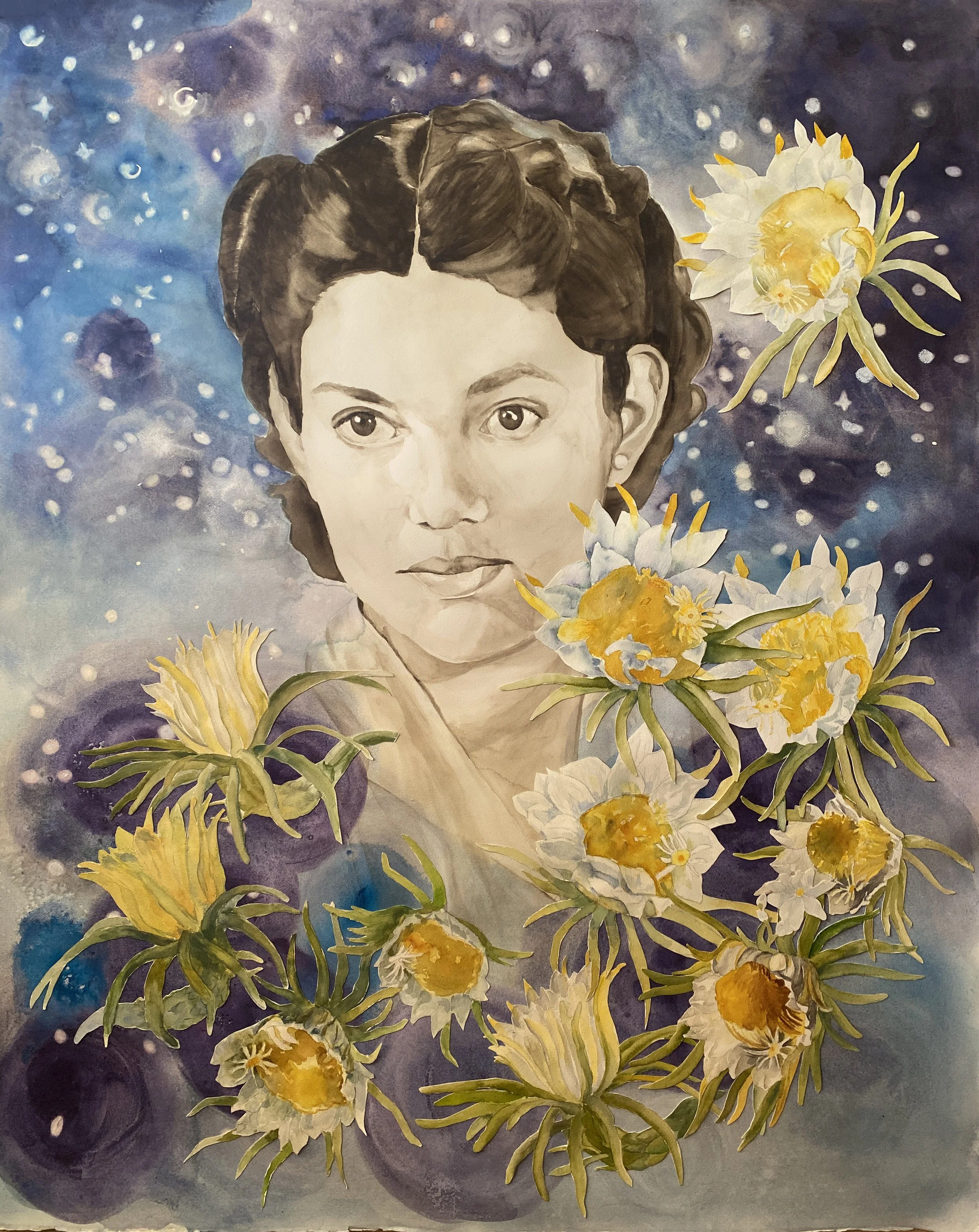
Lead with Love, portrait of Jan Ruff-O’Herne Watercolor on Arches Paper, Ink, Pastel, Watercolor Appliques of Selenicereus flowers, 52” x 42.”
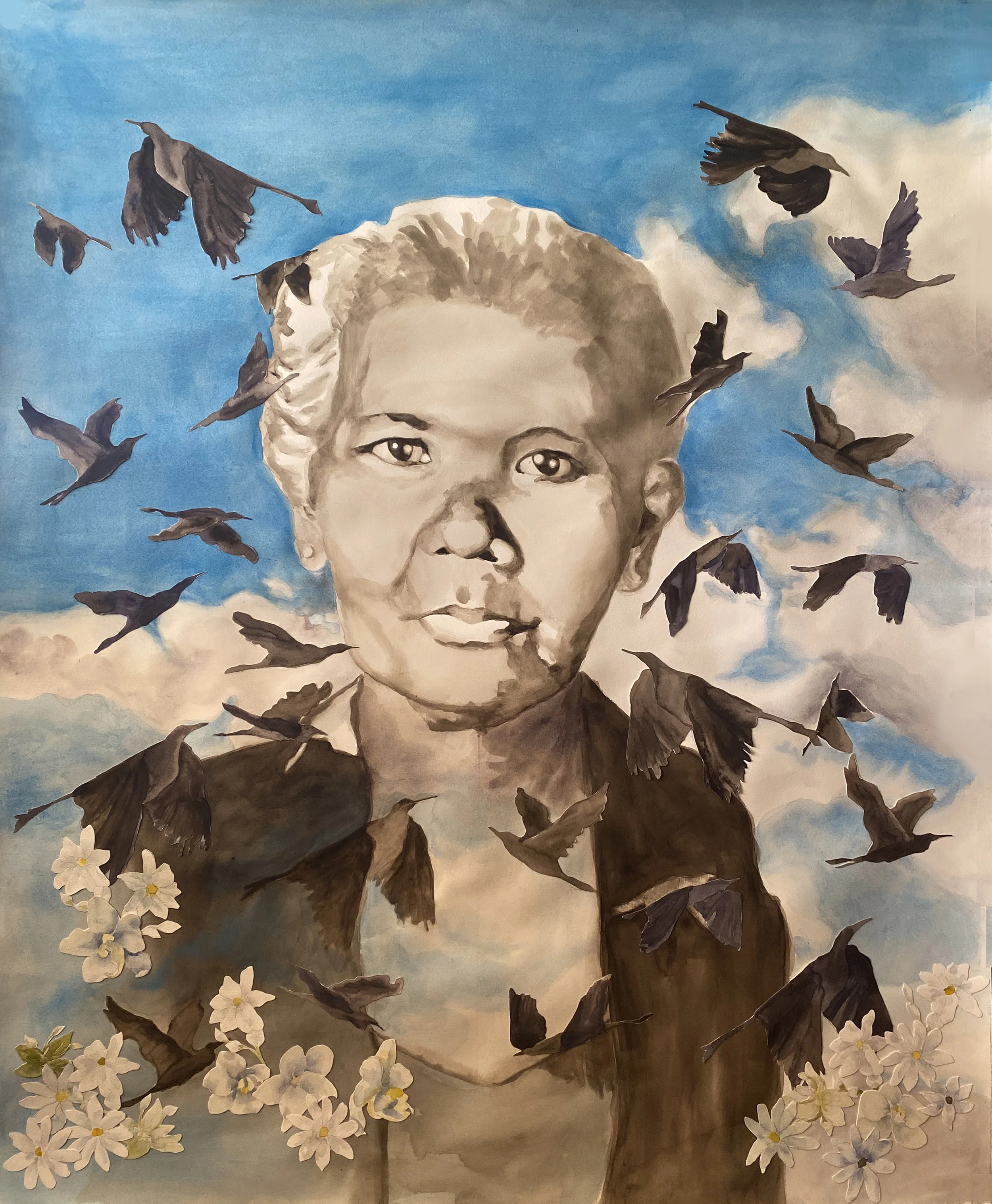
Speaking Through Silence portrait of Tuminah, 2026, Watercolor on Arches Paper, Watercolor Appliques of Birds & Flowers, 52” x 42.”
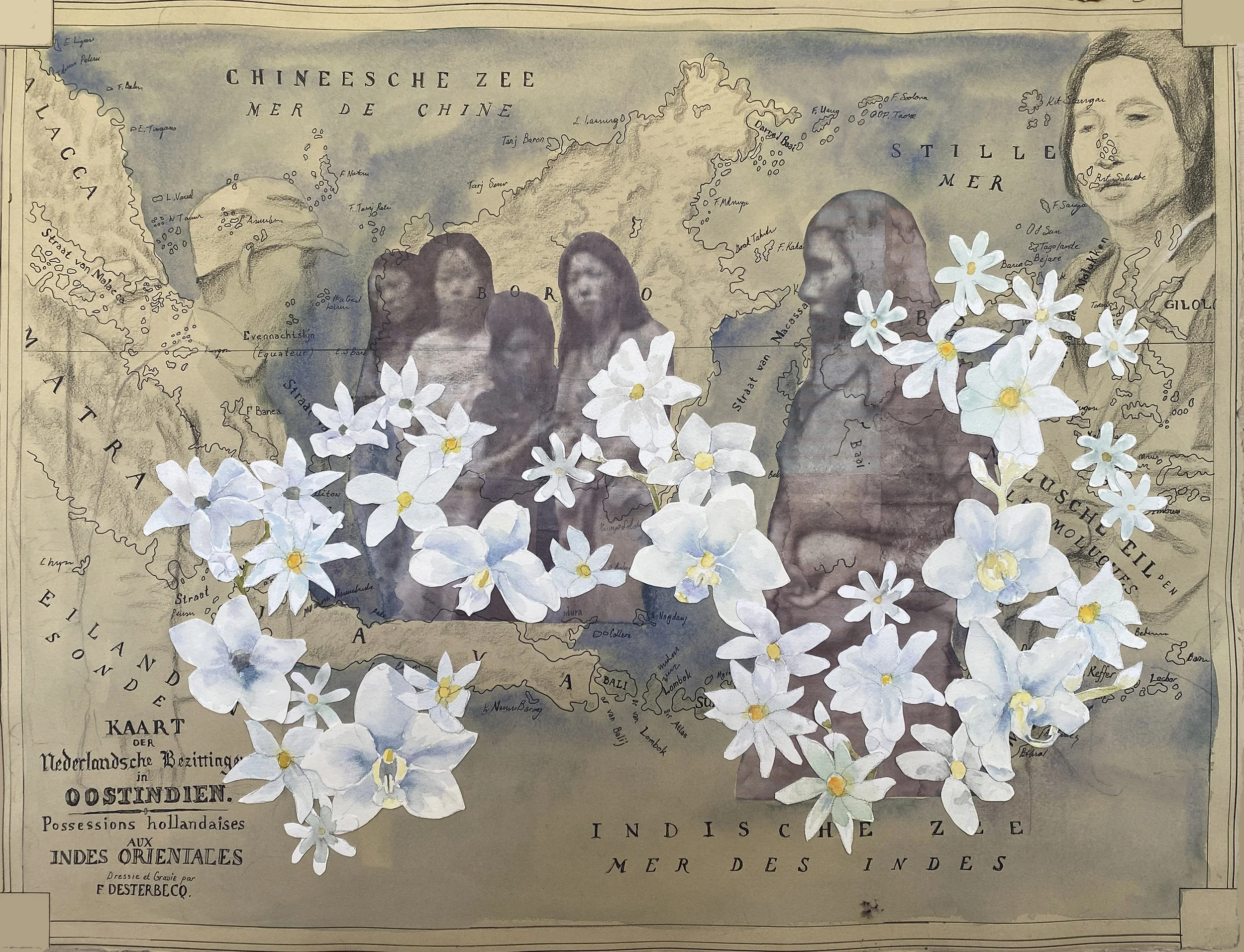
Map of my Body, 2026, Collage, Watercolor, Ink, Pastel, Photo transfer, Watercolor Appliques of Flowers, Colored Pencil, 22” x 30”
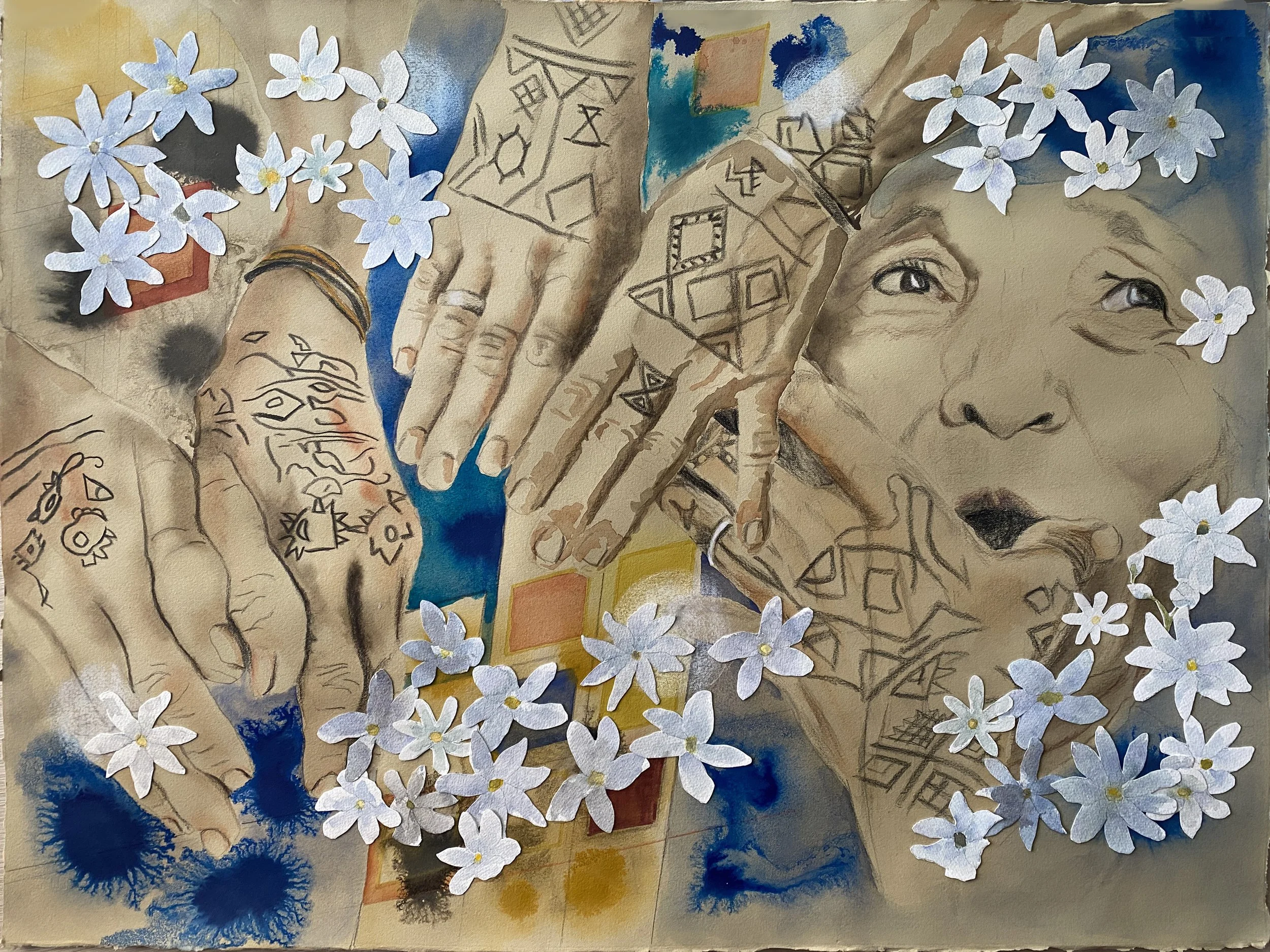
Women Protecting Women, 2026, Collage, Watercolor, Ink, Pastel, Colored Pencils, Appliques of Flowers. 22” x 30”
I Wish I Knew Your Name, 2026, Installation with paper.
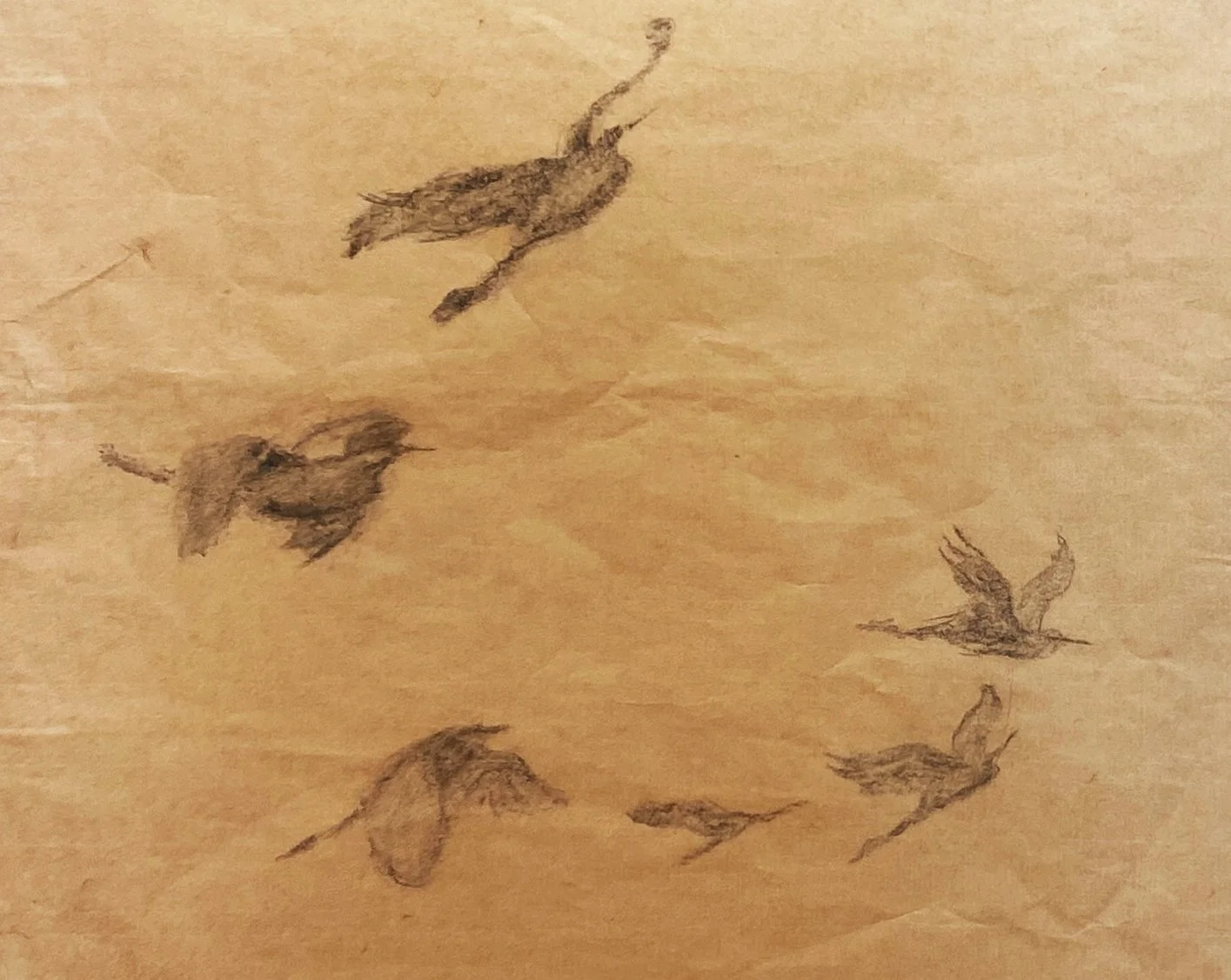
Fly Free, 2025, Charcoal on Paper
Artist Project Statement
I am a fine artist, working in mixed media, and an educator at California State University, Northridge, and California State University, Channel Islands. My project, Speaking Through Silence, is an art exhibit honoring “comfort women” from Indonesia, the former Dutch East Indies. This exhibit includes large portraits of women and collages.
The show’s title, Speaking Through Silence, comes from the many years of secrecy surrounding the experience of women who were forced into sexual slavery, also known as “comfort women,” by the Japanese occupying forces in Indonesia during World War II. The title also refers to the reticence I encountered while trying to gather information from families of my own Dutch Indonesian diaspora about their experiences during that time. I believe this silence is a coping mechanism to ease the trauma of wartime experiences; it is a way of moving forward, but to find healing, the truth must be acknowledged.
My interest in World War II Comfort Women stems from my family history in the Dutch East Indies. The artwork I make explores issues of identity and history, particularly from a matrilineal standpoint. It connects to the past, telling stories to build connections following along a maternal line instead of the patriarchal one taught to me by mainstream history, and this project is an extension of that idea. Up to now, most of my work focused on women known as Njai, who were sold as housekeepers, companions, and concubines to the Dutch during the tenure of their colony and are ancestral mothers to many Dutch families in the Indies. Njai had very few rights; their half-European children’s legitimacy was decided by their fathers and could be taken away at any time. Although the practice of slavery was made illegal in 1860, this system of concubinage continued into the 20th century. This long-practiced patriarchal system created attitudes of trust and obedience among many Indonesian women who later cooperated with Japanese soldiers and became “comfort women,” some by trickery, others by intimidation. Women of European and mixed heritage were also forced into the “comfort woman” system of sexual slavery during this time period. The “comfort women” of Indonesia have not been widely acknowledged, however, and in my year of working on this project, I have discovered that many people think that “comfort women” were only from Korea.
From the years of 1942 to 1945, the Japanese military occupied the Dutch East Indies, and wherever soldiers were stationed, comfort stations or Ianjo were also established. These comfort stations were state-sanctioned brothels where girls and women were forced into prostitution to serve Japanese military personnel. The Japanese were concerned with the sexual comfort of their soldiers, but also their health. Sick soldiers would be counter to their objectives, and through the use of government-sanctioned brothels, it was possible to keep women who were healthy and would not endanger the Japanese military with diseases. This system was also established to keep up an appearance for the Indonesian leadership that ordinary women were protected from random acts of sexual violence. However, those who served as prostitutes did not usually work willingly. The Ianjo were brothels usually attached to restaurants, and the women and girls, many of whom had not even reached menstruation yet, were held there and raped repeatedly and violently. They worked under the worst conditions and were treated as slaves. Often, they were outright kidnapped; European and Eurasian women were also kidnapped and taken from Japanese concentration camps. They were divided according to rank and skin color; lighter-skinned women were reserved for officers and higher-ranked individuals, darker-skinned women were exploited for normal troops; they all suffered.
It is important to note that I use the term “comfort women” in quotation marks because I find the title to be a gross euphemism; it stems from the Japanese term jugan ianfu, meaning comforting or consoling woman. They were considered to be a “gift” to the troops in exchange for their military service. In Korea, women who survived the comfort woman system of enforced prostitution are now called Halmoni, and in the Philippines, they are called Lolas instead; both titles mean grandmother and are used as a title of respect. In Indonesia, however, they are still referred to as Ianfu or Jugun Ianfu because, although the country has acknowledged and recorded their existence, they are not respected in the same way as in other areas. This is due to a nationalistic view that women who engage in immoral behavior lower the status of all Indonesians and nationalistic ties to the Japanese government.
When I first heard about the Lee Yong Soo Comfort Women Human Rights Research and Creative Activity Scholarship, it brought to mind a story from World War II that my mother shared with me. We were talking about forgiveness around the anniversary of the end of World War II. I had just read a letter from a former Japanese soldier who was apologizing for his actions during the war. My mother was trying to resolve her feelings of anger against the Japanese as she recounted this story. During the 1930’s, Japan had become interested in expanding its influence in the Dutch East Indies because of the natural resources and location. They began courting the Indonesian business and political leaders away from the Dutch colonials under the ideals of an Asian rebirth. Japanese businesses opened in Indonesia, and my grandfather became friends with a Japanese shopkeeper. This friend told my grandfather that a war was coming, and he wanted to help offer protection to him and his family. To do this, he took a mirror down in the entryway of their home and wrote something in Japanese on the back. He told my grandfather this message would serve to protect them. Years later, after the start of the war, my mother and her sister were walking home from their volunteer duties at the Red Cross, where they wrapped bandages, when they were noticed by some Japanese soldiers who began to chase them. When my mother and aunt reached home, their father told them to hide, and he showed the soldiers the mirror with the writing on it. To his surprise, the soldiers just turned and left. Later, the family was interned in a concentration camp along with other Indo-Europeans, but my mother and her sisters were never bothered by the soldiers there. They never knew what the words said, but recounting this incident helped my mother to find some forgiveness, remembering that a Japanese individual had extended her family this kindness. I was happy that my mother could find some resolution to her anger, but it was also my first introduction to the plight of “comfort women.”
This project is an act of memorialization to honor and respect the women who were abused by the Japanese army’s comfort stations. Their bravery in speaking out, supporting each other, and even forgiving the past is a powerful act of inspiration to others. This is why I chose to use the tradition of portraiture- a practice historically reserved for people of high station- to depict them. I wanted to show these women as models of spiritual strength and inspiration for others. With this in mind, I decided to create portraits of some of the “comfort women” that I researched. I chose to make large 52 inch by 42 inch watercolor portraits and some smaller collages measuring 20 inches by 30 inches.
Portrait 1. I Wish I Knew Your Name, Portrait for All the Anonymous Survivors of the “Comfort Woman” system. 2026, Watercolor on Arches Paper, Watercolor Appliques of Birds & Orchids, 52” x 42.”
The first portrait is of an unnamed woman, and she serves as a proxy for all the anonymous women who suffered injustice as “comfort women.” I found her photo in an article in Japanese Military "Comfort Women" Issue Research Institute's webzine "Kyeol", interviewing Eka Hindrati about comfort women. I used the original photo as a reference and enveloped her in a landscape of clouds, birds, and orchids.
Portrait 2. Lead with Love, portrait of Jan Ruff-O’Herne. Watercolor on Arches Paper, Ink, Pastel, Watercolor Appliques of Selenicereus flowers, 52” x 42.”
The second portrait is of Jan Ruff O’Herne, who wrote about her experiences in her book Fifty Years of Silence. Naturally, I knew the comfort women had been through horrible abuse, but it was very difficult to read and assimilate the level of injury that these women experienced. When I read Jan Ruff O’Herne’s book and later saw her speaking in interviews, however, I was especially affected by her positivity, faith, and ability to offer forgiveness. Her portrait from the cover of her book was used as a reference image to depict her in a night sky landscape surrounded by stars, orbs, and night-blooming Selenicereus flowers.
Portrait 3. Speaking Through Silence portrait of Tuminah, 2026, Watercolor on Arches Paper, Watercolor Appliques of Birds & Flowers, 52” x 42.”
The third portrait is of Tuminah, the first Indonesian “comfort woman” to come forward and speak out about her experiences after hearing about Kim Hak-sun, a Korean “comfort woman” who came forward in 1991. I believe Tuminah is the one who Spoke through the Silence. I depicted her as she is shown on her headstone (which was paid for by individual Japanese donors), as a mature woman, with birds and flowers surrounding her as symbols of freedom and honor.
Additionally, I made two collages measuring 22 inches by 30 inches each.
Map of my Body, 2026, Collage, Watercolor, Ink, Pastel, Photo transfer, Watercolor Appliques of Flowers, Colored Pencil, 22” x 30”
The first one is a hand-drawn map of Indonesia from the time period, superimposed with drawings of soldiers and comfort women, photo transfers, and watercolor flowers on the surface of the map.
Women Protecting Women, 2026, Collage, Watercolor, Ink, Pastel, Colored Pencils, Appliques of Flowers. 22” x 30”
The second is inspired by a story I saw on YouTube about women from the island of Timor who saved each other from the “comfort women” system by tattooing each other’s hands. indicating they were married. This story was so empowering that I wanted to include it in my show.
Knowing how reluctant governments are to offer true reparations for their past injustices and that the Japanese government has only offered minimal apologies for the government-sanctioned sexual slavery imposed upon women living in occupied areas throughout Asia during World War II, it is immensely healing to know that individuals can find forgiveness. It was an honor to be allowed to depict these women, and it offered me a sense of healing as an observer.
Save the Date
November 11, 2026
This exhibit will be shown at California State University, Channel Islands, Broome Library Gallery
If you would like to fill out a questionnaire about your family’s personal experiences in World War II in Indonesia, especially about “comfort women” histories, follow this link: https://form.typeform.com/to/Ya2dpB9A